See Ruins |

    

|
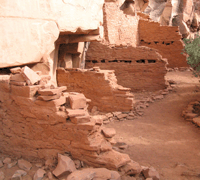
See | Art | Rocks | Vortexes | Ruins There are lots of ancient ruins and rock art in and around Sedona. Our first trip we saw three of the more popular ones. West of Sedona, north of Hwy 89A are two sites located fairly close together, the Honanki and Palatki Ruins. Both sites were inhabited by the Southern Sinagua (without water), also refered to as Western Anasazi, between 500 and 1425 AD. The Sinagua are the ancestors of the Hopi. The Palatki (Hopi for "Red House") site is actually two sites and requires registration and often reservations to view. Both are accessed by little trails through some pretty, almost "foresty", landscape. They are fairly simple but not handicapped accessible. There is also a historic ranch house built in the 1920's that serves as the ranger station, information and small gift shop.
Palatki Cliff Dwelling Site
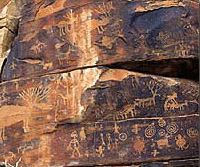
Red Cliff Rock Art Site
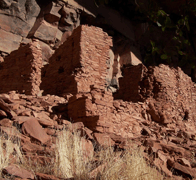
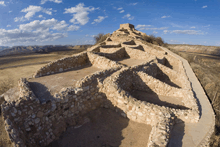
This site has much easier access and requires no registration. The site was named by Smithsonian Archeologist Jesse Walter Fewks in 1895. He intended to name it "Bear House" in the Hopi language, but a mispelling of one letter identified it as "House of the Badger". It is still generally refered to as "Bear House." The remains indicate that this site was home to 300-400 people. Sadly, much of it has been vandalized rather than time-worn. Wooden supports for doors and windows suggest that the Sinagua lived here about 1130-1280 AD, although there are pictographs and petroglyphs dating back thousands of years from more ancient civilizations. Tuzigoot National Monument This was originally a two-story settlement and there are still some second story rooms remaining. There is one incredible room below the surface that has huge wooden beams and rafters. You can see cooking areas and other dwelling features quite nicely in numerous rooms. This is a very large structure with rooms built back-to-back as well as side-to-side. There are some communal areas and small trails leading down to the fields that were farmed in the valley area an some of the hillside.
|

Back to top | Home | My Sedona | Where to Stay | Where to Eat | What to Do | What to See | Photos | Contact | Site Map |
|

